


Mediation Skills for Teams & Organisations

The world of work has never been more demanding. Rising conflict, fractured relationships, complex negotiations, hybrid teams, and a rapidly shifting legal landscape mean that the ability to listen well, manage emotion, and navigate difficult conversations is no longer a nice-to-have, it is a core professional capability.

CEDR equips entire teams, not just individuals, with the interpersonal skills of mediation: the same hard skills that resolve disputes, win negotiations, hold relationships together, and help organisations thrive under pressure.

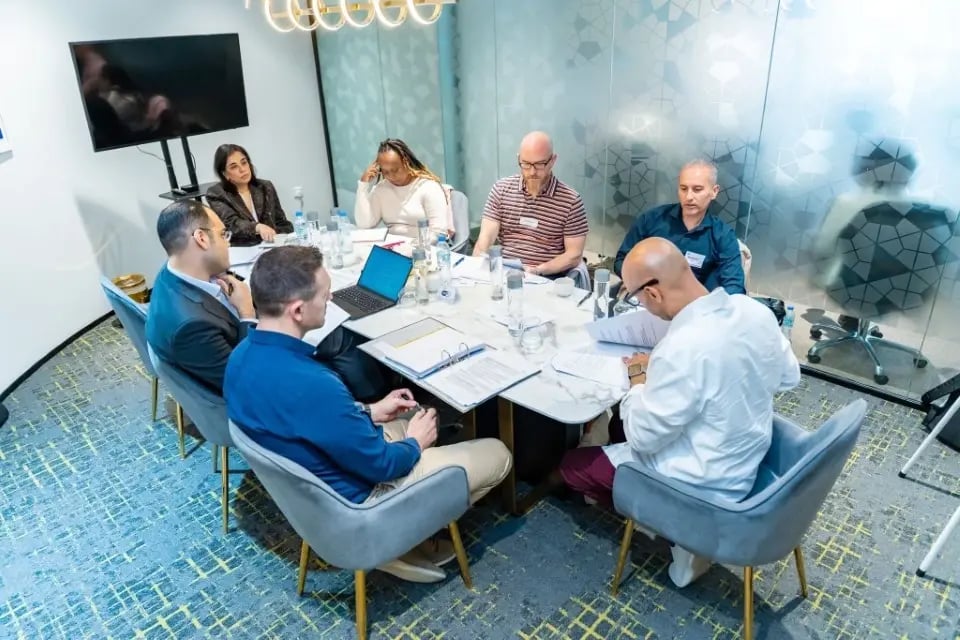
CEDR-Training-Audience-with-very-happy-female-delegate-in-focus (1)

More Than Mediation Training. An Enhanced Interpersonal Skillset.

CEDR has trained individuals in mediation skills for over three decades. But increasingly, the professionals who come to us are not aspiring mediators. They are HR directors, commercial leaders, sales teams, and project managers who recognise that the skills of mediation are the skills their people need most right now.

Our team and organisational training goes beyond conflict resolution. We build the interpersonal capabilities that help people communicate more effectively, negotiate with challenging counterparts, manage difficult stakeholders, facilitate tense conversations, and resolve friction early - before it becomes something costlier.

Whether you need to upskill a team of 12 or deploy capability across thousands of employees globally, CEDR designs, delivers, and embeds training that changes how people operate under pressure, not just in disputes, but every day.

We are practitioners, not lecturers. Every programme is delivered by people who use these skills live - in complex mediations, crisis negotiations, commercial disputes, and international conflicts. They teach from experience, not from textbooks.

HR & Employee Relations

Build early-intervention capability and resolve grievances before they reach formal procedure, tribunal, or legal process.

People Managers

Ensure every line manager has the confidence and language to address team conflict themselves, without defaulting immediately to HR.

Senior Leadership

Equip leaders to model conflict-literate behaviours, navigate politically charged conversations, and steer teams through tension with confidence.

Legal & Compliance

Develop skills for high-stakes conversations where listening, reframing, and managing opposing interests are as important as legal knowledge.

Commercial & Sales

Give client-facing teams the interpersonal edge to manage deadlocked negotiations, emotionally charged counterparts, and relationship repair.

Project & Programme Managers

Equip project teams to identify friction early, manage competing stakeholder interests, and sustain collaborations under pressure.

Why Train Teams, Not Just Individuals?

Sending one person on a mediation course creates a single point of competence. Building capability across a team, department, or organisation creates something fundamentally different: a shared language, a consistent set of interpersonal tools, and a culture where conflict doesn't fester, it gets addressed.

The Case for Team Training

Not Just Dispute Skills

CEDR_icons_Utilities 1

Mediation skills - active listening, managing emotion, reframing positions, influencing with integrity - are in demand across your organisation. In performance conversations, procurement negotiations, client meetings, and leadership decisions. Team training gives everyone access to the same high-quality interpersonal toolkit.

Shared Language Changes Culture

CEDR_icons_Success 1
When an entire HR function or leadership team shares the same conflict frameworks and conversational techniques, they reinforce each other's practice. Individual skills become organisational capability. Avoidance gives way to early, constructive intervention - and the culture shifts permanently.

Resolve Conflicts Early

CEDR_icons_Complete 1
Research shows 85% of conflicts are resolvable at early stages. Most organisations only intervene when formal processes are the only option. Team training puts the right capabilities at the right levels - where conflict actually lives, in managers, teams, and daily interactions.

Individual Training Doesn't Outlast Attrition

CEDR_icons_HR
If the one trained mediator in your organisation leaves, the capability goes with them. Team training builds sustainable organisational muscle and capabilities to support the company through attrition or fluctuations in demand.

Supporting Your People Managers

CEDR_icons_Confidential 1
Only 40% of people managers receive any conflict training, yet they face it daily. Research shows 32% of employees say their manager made conflict situations worse. Team training at management level fixes this at source and gives the organisation its most powerful early-intervention resource.

The ROI Is Significant and Measurable

handshake-sharp-thin-full 1
Formal conflict procedures cost three times more than informal resolution. Average litigation reaches £160,000 per case. One global technology company that invested in mediation skills training for all managers saw formal grievances fall 67% and employee engagement rise 31% within 18 months.

What Your Teams Will Learn

CEDR's training develops practical capabilities grounded in real-world mediation and commercial practice. Each skill is taught through intensive, scenario-based role-play, tailored to your organisation's actual challenges and has immediate application far beyond the traditional dispute context.

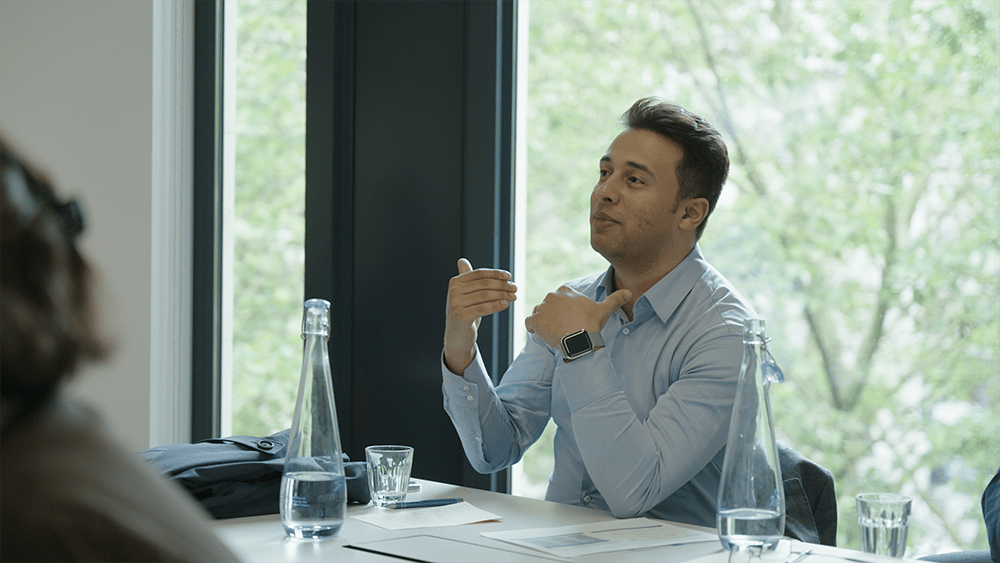
CEDR-Professionals-in-discussion-with-a-window-behind (1) (1)

Emotional Mastery & Interpersonal Intelligence

  • Active Listening Skills
    Move beyond passive hearing to uncover what is really being said. Build trust and connection through attentive, purposeful dialogue. Identify the root cause of difficult behaviour and use listening as a tool for de-escalation - in grievance conversations, client meetings, and everything in between.
  • Managing Emotions
    Understand how emotions drive behaviour and show up in professional settings. Develop techniques for self-regulation under pressure and for helping others move through a spectrum of emotional reactions without losing control of the conversation.
  • Building & Maintaining Trust and Rapport
    Establish credibility and connection quickly, even in adversarial contexts. Learn how to maintain rapport when conversations become difficult or emotional, and how to rebuild trust once it has been compromised - a critical capability for anyone managing long-term relationships.
 
CEDR-Training-Delegate-Interacts-with-Trainer-in-discussion

Strategic Communication & Influence

  • Effective Information Exchange
    Manage the strategic flow of information - what to share, when, and how - to keep conversations constructive and progress moving forward. Understand what drives people beyond their stated positions.
  • Influence & Persuasion
    Understand the psychology of how people make decisions and what actually changes minds. Apply persuasive techniques with integrity - including in situations of power imbalance - to move conversations from impasse toward agreement. Particularly valuable for sales teams, procurement professionals, and anyone who needs to influence without authority.
  • Challenging & Reality Testing
    Surfacing uncomfortable truths is often the turning point in a difficult conversation. Develop the skill to challenge assumptions, test the strength of positions, and offer alternative perspectives - constructively, with firmness and tact - in a way that unlocks new thinking rather than entrenching resistance.
Dubai MST 2026 3

Adaptive Problem-Solving & Negotiation

  • Structured Dialogue & Flexible Frameworks 
    Work with a clear route map for planning, monitoring, and navigating difficult conversations across their key phases - from opening and exploration through to problem-solving and conclusion. Know how to adapt the framework when situations are fast-moving or spiralling, and how to use structure to move beyond deadlock and deliver difficult messages effectively.
  • Conflict & Communication Styles
    Understand the five behavioural styles that emerge in challenging conversations - and your own default among them. Learn to recognise others' preferred styles and adapt your approach strategically to suit the person and situation you face.
  • Breaking Deadlock
    Techniques to manage impasse, reframe entrenched positions, and find outcomes that genuinely work for all parties. Learn how to package and present solutions, manage expectations constructively, and conclude conversations well, even when they started badly.

Our Impact

CEDR has trained teams and entire functions across some of the world's most recognisable organisations, equipping everyone from sales teams and project managers to global ER functions and C-suite leaders with the interpersonal skills to operate more effectively under pressure. The outcomes are consistent: earlier resolution, stronger relationships, and a measurable shift in culture.

Barclays - Upskilling Employee Relations Function

Challenge

Challenge

Rising grievances were consuming significant ER resource, with too many issues escalating to formal procedure before any informal resolution had been explored. The function needed a shared approach to engaging with conflict at the earliest possible stage.

map-sharp-thin-full 1

Approach

CEDR trained Barclays' entire Employee Relations function in mediation skills, building capability in early intervention, active listening, and structured dialogue for sensitive workplace conversations.

handshake-sharp-thin-full 1

Outcome

The ER team gained a common language and framework for engaging with conflict before it escalated, reducing reliance on formal grievance procedures and improving the experience of employees on both sides of a dispute.

Nokia - Mediation Training for Senior HR Exectuives

Challenge

Challenge

Nokia wanted to move away from a reactive, procedure-led approach to conflict and embed a genuinely different culture of early, human-centred resolution at the highest levels of the organisation.

map-sharp-thin-full 1

Approach

CEDR accredited six of Nokia's most senior HR and ER leaders as CEDR Mediators, including the Chief People Officer, placing mediation expertise at the heart of the people function rather than at the periphery.

handshake-sharp-thin-full 1

Outcome

With accredited mediators operating at leadership level, Nokia established the foundation for a whole-organisation transformation in how workplace conflict is approached, with senior leaders actively modelling and championing early resolution.

Takeda - Empowering Global Employee Relations Function

Challenge

Challenge

Takeda's ER function was managing workplace conflict across multiple jurisdictions with inconsistent approaches, and a number of disputes were escalating to a level that required external intervention.

map-sharp-thin-full 1

Approach

CEDR trained the entire global ER function in workplace mediation and difficult conversations skills, and separately mediated several of Takeda's most complex live disputes to resolve immediate pressures while building internal capability. 

handshake-sharp-thin-full 1

Outcome

The global ER team developed a consistent, confident approach to conflict across all jurisdictions, reducing unnecessary escalation and equipping the function to handle even the most challenging interpersonal situations internally.

AstraZeneca - Developing Workplace Mediation Capabilities

Challenge

Challenge

Across multiple jurisdictions, workplace conflicts were reaching formal stages more often than necessary, creating cost and relationship damage.

map-sharp-thin-full 1

Approach

CEDR trained a specific team within the wider ER function in essential early engagement skills.

handshake-sharp-thin-full 1

Outcome

More conflicts were addressed and engaged with earlier, leading to fewer escalated and formal procedures.

Sanofi - Developing Internal Ombuds Function

Challenge

Challenge

Sanofi recognised that employees needed a trusted, impartial channel for raising concerns that fell outside formal HR and legal processes, but the organisation had no internal structure, trained professionals, or operational model in place to provide it.

map-sharp-thin-full 1

Approach

CEDR supported the full design and implementation of a new internal ombudsperson service, advising on structure and recruitment as well as training the entire function in negotiation and conflict engagement skills.

handshake-sharp-thin-full 1

Outcome

Sanofi launched a fully operational internal ombuds function with staff equipped to handle sensitive and complex interpersonal issues with confidence, giving employees an accessible route to early resolution that sits alongside, rather than inside, formal procedure.

Skuld - Enhancing Organisational Mediation Capabilities

Challenge

Challenge

As a global marine insurer, Skuld's claims and legal professionals were regularly navigating high-stakes, multi-jurisdictional disputes and complex commercial negotiations where interpersonal skill was as critical as technical knowledge, and where misjudging a conversation could affect both outcomes and relationships.

map-sharp-thin-full 1

Approach

 CEDR delivers annual mediator skills training for Skuld's team, equipping them with structured dialogue frameworks, advanced listening techniques, and negotiation tools drawn from commercial mediation and real-world dispute practice.

handshake-sharp-thin-full 1

Outcome

Skuld professionals developed a more sophisticated and confident approach to difficult conversations and high-pressure negotiations, better placed to manage tension constructively, reach durable agreements, and protect the long-term relationships that underpin the business.

Trusted by Individuals & Global Brands

Arrowhead circle-1
"An illuminating learning experience - thank you to our incredible and inspiring tutors at CEDR and to my fellow delegates for your insights, collaboration, energy and the unexpected laughter, along the way."

Alison Kynoch, Head of Employee Relations, APAC & MEA, Deutsche Bank

"What a week... I don't know if I ever had so much concentrated knowledge and skills uploaded between my ears in such a short period of time! Many thanks to the impressive team at CEDR for their guidance and support."

Antoni Otffinowski, Head of EMEA Banking Sales, Visible Alpha (S&P Global)

"This course was really worthwhile and I would strongly recommend. I enjoyed this training and was really engaged throughout. I'm glad I invested the time in my own personal development and cannot recommend highly enough."

HR Lead, Takeda

"I had the privilege of completing the CEDR mediator training and I can honestly say it was one of the most intense, enriching and inspiring professional experiences I have had. A huge thank you to the outstanding faculty at CEDR for their energy, expertise and generosity throughout the week. Your guidance made the learning both challenging and deeply rewarding."

Aline Weier, Senior Head of Resources Management Unit & Chief of Staff, European Investment Bank (EIB)

"It was a challenging and rewarding week—stretching me well beyond my comfort zone, building on my existing skills as an Ombud, and developing new capabilities to broaden my practice into mediation. I particularly valued learning in person alongside a diverse and talented cohort of professionals I might never otherwise have met."

Caz Williamson, Ombud, McKinsey

"A truly enriching experience. An excellent training and a privilege to learn alongside such an inspiring and diverse group of professionals from around the world. Many thanks to the CEDR team and faculty for such a high-quality programme."

Carla Tilley, Public Prosecutor - Promotora de Justiça na Ministério Público do Estado do Rio de Janeiro (MPRJ)

"Although I was already familiar with the mediation process through my disputes experience, I have gained a much deeper understanding and appreciation of the mediation process, and have developed skills that will be immeasurably helpful in my role as an in-house lawyer. I would absolutely recommend this course to others."

Laura Hickman, Legal Counsel, De Beers Group

"What a great week - the CEDR course was hugely valuable, and I am very grateful to everyone involved. There was a lot to cover, and it was intense, but it was also tremendous fun. I heartily recommend it to anyone who would like to develop a new perspective on negotiation, deal dynamics or dispute resolution."

Malcolm Hitching, Partner, Macfarlanes

"Thank you to CEDR and the brilliant trainers, coaches and assessors for such an intense, rigorous and rewarding five days. It was a privilege to learn alongside such an impressive and diverse group of professionals. I’m taking away invaluable skills, fresh perspectives and a renewed respect for the craft of mediation. Grateful to have been part of this cohort."

Francisca Montgomery, Senior Legal Counsel (Europe) at The Bank of Nova Scotia

Meet The People Behind Our Services

At CEDR, our trainers and facilitators aren't academics teaching theory from textbooks - they're seasoned practitioners who apply these skills in high-stakes environments every single day. From resolving multi-billion pound commercial disputes to defusing hostage crises, our team of over 50 expert mediators across 20 countries represent the pinnacle of real-world conflict expertise. 

Susanne Schuler Profile Photo
Wolf von Kumberg Profile Photo
Gillian Caroe Profile Photo
Amrik Kandola Profile Photo
Tracey Fox Profile Photo
Philip Williams Profile Photo
Felicity Steadman Profile Photo
Chula Rupasinha Profile Photo
Lisa Drake Profile Photo-1

CEDR Trainers

99% of attendees rate the faculty's teaching style as excellent.

The difference between CEDR training and other programmes comes down to one principle: our trainers teach what they practice every day. As the most experienced body of mediation trainers globally, CEDR has refined adult learning techniques over 35 years to ensure engaging, practical training throughout.

Every member of CEDR's training faculty maintains an active professional practice. They're not teaching from outdated case studies or textbook theories - they're sharing techniques they used last week, challenges they navigated last month, and emerging trends they're seeing right now.

Frequently Asked Questions

What is mediation skills training for teams?

Mediation skills training for teams equips groups of employees with the interpersonal and conflict resolution capabilities that the modern world of work demands. These include active listening, emotional management, constructive challenge, and structured dialogue. The skills apply equally to resolving internal disputes, managing difficult stakeholders, navigating complex negotiations, and leading challenging conversations with confidence.

Why are mediation skills described as interpersonal skills for the workplace?

The core skills of mediation are the same skills needed to lead people, win client relationships, navigate internal politics, and make difficult conversations productive. Listening deeply, managing emotions, understanding what drives people's behaviour, and reframing conflict constructively are not niche dispute resolution tools. They are foundational human capabilities that every professional needs in a world of increasing complexity, tension, and difference.

Which departments benefit most from mediation skills training?

The teams CEDR most commonly trains include HR and Employee Relations, senior leadership, legal and compliance, sales and commercial functions, project and programme management, and customer facing teams. In practice, any team that manages people, handles external stakeholder relationships, conducts negotiations, or regularly navigates high stakes or emotionally charged conversations will benefit significantly from this kind of capability.

How is team training different from individual mediator accreditation?

Individual accreditation trains people to act as formal mediators in disputes involving third parties. Team training in mediation skills equips employees with the core interpersonal tools of mediation, including active listening, emotional regulation, reframing, and reality testing, for use across their everyday professional roles. It builds organisation wide human capability rather than creating a single specialist function that the rest of the business depends upon. 

Accreditation is also possible within a team and organisational training context.

How large a team can CEDR train?

CEDR works across a wide range of scales. Focused cohort programmes typically accommodate 12 to 24 participants for maximum practical engagement. For rollouts across an entire organisation, CEDR has delivered programmes to hundreds and thousands of staff, including training over 500 professionals at Sopra Steria and the entire global ER function at Takeda. Train the trainer programmes are also available for organisations looking to build and sustain capability at scale internally. 

Why train teams rather than just individuals?

Conflict and difficult conversations are team problems, not individual ones. When an entire HR function, leadership cohort, or sales team shares the same language, frameworks, and interpersonal capabilities, organisations see lasting behaviour change. Disputes get resolved earlier, negotiations are handled more skilfully, and a culture emerges where difficult conversations are addressed rather than avoided. Research shows that 85% of conflicts can be resolved at early stages, but only if the right skills are distributed widely enough across the organisation to catch them in time.

Does CEDR offer ongoing support after the initial training?

Yes. CEDR's model is built around an ongoing partnership rather than a single event. Following training, organisations can access conflict coaching on demand, external mediation for complex cases, aftercare facilitation to restore relationships where they have broken down, and train the trainer programmes that enable organisations to scale capability internally over time.

How does this training connect to the UK Employment Rights Bill?

The Employment Rights Bill introduces 28 major changes to employment law, including day one unfair dismissal rights, extended tribunal time limits, and strengthened harassment prevention duties. These changes will significantly increase workplace dispute volumes from October 2026. Organisations that build internal mediation and interpersonal capability now will be far better placed to resolve conflicts early, avoid costly proceedings, and meet the proactive conflict management expectations the legislation creates.