





CEDR Foundation: Advancing Conflict Resolution for Everyone
Building a world where everyone has the skills and access to resolve disputes constructively, that's the mission driving everything we do at the CEDR Foundation.
As CEDR's non-profit arm, we're dedicated to removing barriers, expanding access, and advancing the practice of alternative dispute resolution through cutting-edge research, innovative programmes, and practical resources that benefit individuals, organisations, and society as a whole.
Our work spans from training the next generation of conflict resolvers to championing diversity in mediation, from providing free venue space for charitable initiatives to developing model documents that raise standards across the profession. Each project is driven by one core belief: conflict resolution should be accessible to all, delivered by practitioners who represent society's full diversity, and continually improved through evidence-based research.
.webp?width=600&height=400&name=CEDR-St-Pauls-Cathedral-with-blue-sky-green-trees%20(1).webp)
National Student Negotiation Competition: Developing Tomorrow's Negotiators
Test your negotiation skills against the best law students in England and Wales and potentially represent your country internationally.
For over a decade, CEDR has partnered with the University of Law to run this prestigious competition, giving law students the opportunity to develop practical negotiation skills, compete at national level, and progress to international championship representation.
How it works:
Three regional heats (Leeds, London, and virtual) determine which teams progress to the national finals. Regional winners receive a one-day negotiation skills training course from CEDR before competing in the finals. The winning team represents England and Wales at the International Negotiation Competition.
What participants say:
"The National Student Negotiation Competition was a fantastic opportunity to develop my negotiation skills, working with not only some of the best student negotiators but also judges from across industries, with valuable experience to pass on. I cannot recommend the competition enough to anybody who wants to test their skills in practice."
— Charlie Brook, Royal Holloway University of London

Skills for Life Programme: Training Young People for Difficult Conversations
Equip 16-25 year olds with essential conflict resolution skills that will serve them throughout their lives.
Difficult conversations happen everywhere - at work, at home, amongst peer groups. The young people who can navigate these conversations with confidence and skill become tomorrow's most effective leaders.
Our Skills for Life programme provides practical training in handling challenging conversations, building on nearly a decade of delivering in-person difficult conversations training through our New Dialogues Programme since 2017. Now, with an online format, we can reach far more young people who need these essential skills.
What participants learn:
- Active listening techniques to understand what's really happening in conflicts
- How to handle emotions effectively - both their own and others'
- Strategies for working with different conflict styles
- The art of influencing with integrity and ethical persuasion
Who should apply: We're initially offering the programme free or at low cost to charitable and non-profit educational organisations working with people aged 16-25. We plan to extend availability to other organisations and individuals in future.
Course structure: Introduction and framework, followed by four core modules covering listening, emotions, conflict styles, and persuasion, plus assessment and resources for continued development.
What past participants say: Feedback from our pilot programme shows participants gain confidence, practical skills, and a framework they can apply immediately to real-world situations.
Ready to apply? If your organisation works with young people aged 16-25 and you'd like to equip them with essential conflict resolution skills, get in touch. We'd love to discuss how the programme could benefit your young people.
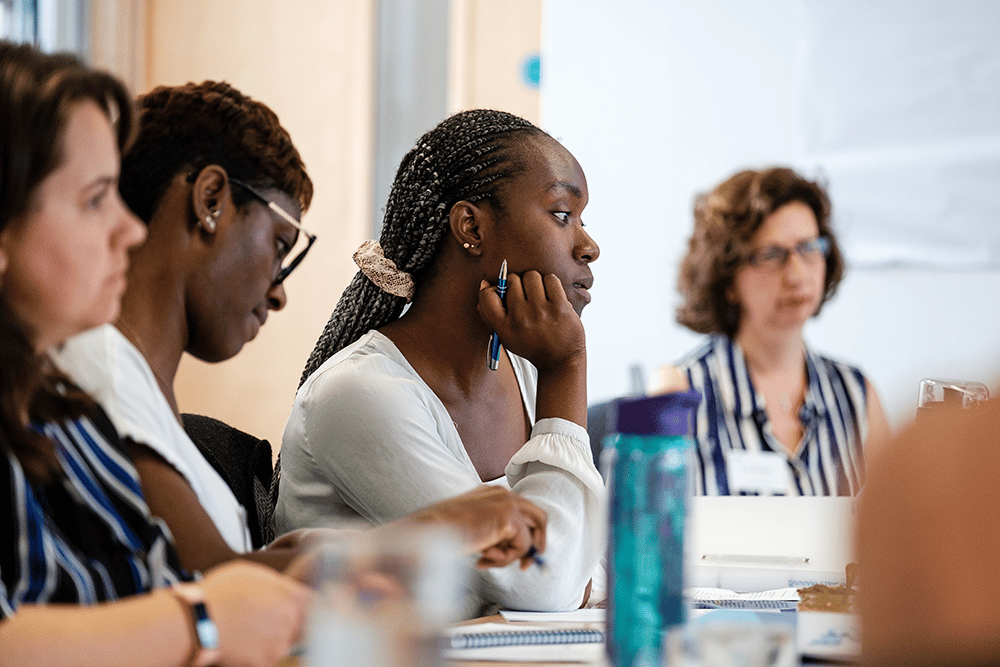
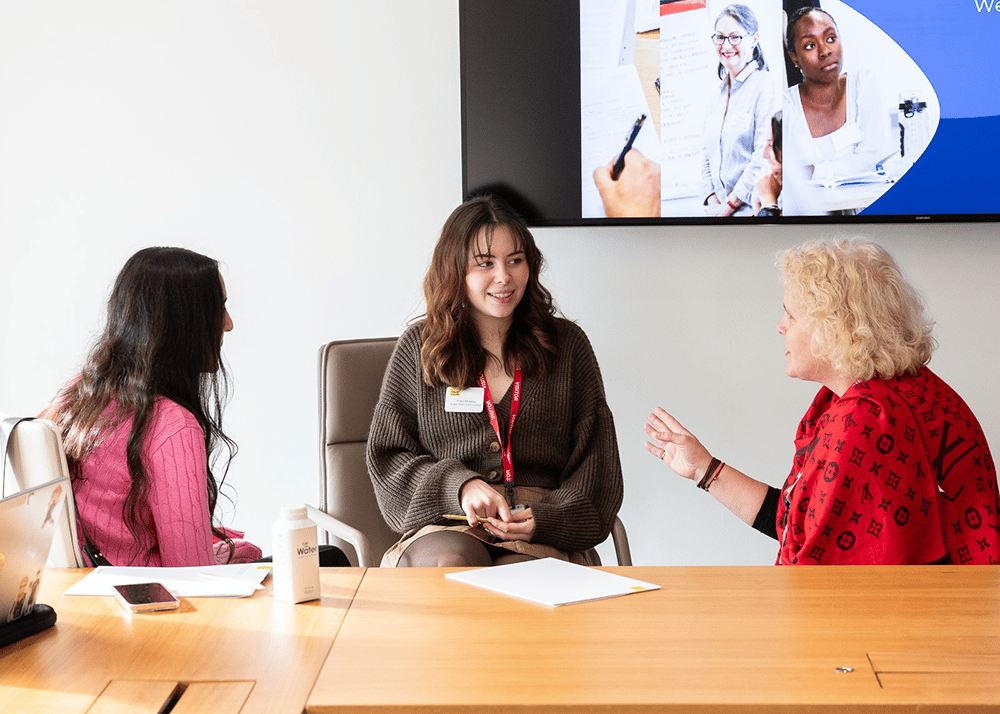
Diversity & Inclusion in Mediation: Building a Profession That Reflects Society
Creating pathways and removing barriers so mediation represents the full diversity of the society it serves.
Since 2018, we've driven a major initiative to transform diversity and inclusion in civil and commercial mediation. Why? Because mediation is most effective when delivered by practitioners who bring diverse experiences, perspectives, and styles, and when the profession reflects the society it serves.
The current picture:
The data reveals significant underrepresentation:
- Just 38% of experienced mediators are female (down 3% from 2021)
- Non-white mediators comprise only 8% of the profession, compared with 18% of solicitors
- 74% of commercial mediators are over 50, with average ages of 61 for men and 53 for women
Barriers exist at every stage, from deciding to train as a mediator, through accreditation, to being selected for cases or panels. Common obstacles include lack of role models, unconscious bias, network inequities, and rigid selection criteria favouring insiders.
What we're doing:
The Diversity & Inclusion Mediation Charter
A commitment framework that organisations can sign to pledge action on improving mediator diversity. The appetite is clear: 92% of lawyers surveyed support the charter, and 100% said mediator recommendation lists should always include diverse candidates.
Research & reports
We've commissioned and published detailed analysis examining barriers by gender, race/ethnicity, and age, offering evidence-based recommendations for improvement across training, assessment, and selection processes.
Interview & dialogue series
"Challenges within Diversity & Inclusion" features podcasts and conversations with practitioners, thought leaders, and change-makers examining equity, representation, and change in mediation practice.
Practical recommendations:
- Review training, role-plays, and assessments to reduce bias
- Train trainers and assessors in unconscious bias and inclusive practices
- Use transparent, inclusive criteria for panel selection and case appointments
- Create mentorship, observership, and shadowing opportunities for underrepresented groups
- Proactively promote diverse mediators in marketing and selection
Why this matters:
A more diverse mediator pool improves client trust (people are more comfortable when they see themselves represented), broadens perspectives and styles (enriching the mediation process), and reduces systemic bias whilst promoting fairer access to the profession.
Get involved:
- Sign the Charter: Pledge your organisation's commitment to improving mediator diversity
- Participate: Join future dialogues or contribute to our interview series
- Use our research: Download and cite our reports to inform your policy, training, and practice
The Diversity & Inclusion Mediation Charter
At CEDR, we're committed to improving diversity and inclusion in civil and commercial mediation. We believe that mediation is best delivered by mediators who represent the full range of society and that there should be no barriers to entering the profession based on individual characteristics.
Why the Charter matters
We recognise that commercial mediation does not currently have proportionate representation for gender, race, and age, and we're committed to increasing the diversity of mediator representation to more accurately reflect society. As an established profession supporting clients to resolve their disputes, it's important that mediation, as with all professions, reflects the society that it serves. The diversity of mediators in being able to bring different experiences, perspectives, and styles can be an important factor in achieving resolution.
Support for change
The CEDR Audit identified an appetite for proactive work from mediation organisations and law firm clients to help improve the diversity of the mediation profession:
- 92% of lawyers surveyed said they would support a charter
- 100% of lawyers said that where mediator recommendation lists are provided, they should always include diverse candidates
- 92% of lawyers and 96% of mediators supported the use of junior mediators as assistants working with senior mediators to increase access to the field
Our approach
For law firms, this charter focuses on improving representation of these three protected characteristics, whilst recognising that there's work to do to improve diversity and increase the inclusion of people with all protected characteristics. We want mediators to be selected through fair and transparent processes that focus on their competence and experience as mediators, rather than any other factors.
In our approach to improving diversity, we're not seeking to exclude any individual mediator. Rather, we seek to increase opportunities for all by removing direct and indirect barriers to progression and development.
Change does not happen in a vacuum, and we're aware of the need for public acknowledgement of the importance of diversity in the mediation profession from those working as mediators, mediator providers, mediation training providers, and clients. Mediation is a voluntary process by all involved and comes frequently with a large amount of choice. In committing to this charter, we're asking those who sign it to pledge to utilise that choice in a way that supports these values and improves commercial mediation.
Join the movement: The Charter is available to be read and signed now. CEDR formally launched the Charter on 27 January 2022 at a launch event. Sign the Charter in your individual capacity, or email foundation@cedr.com to sign on behalf of an organisation.

Model Mediation Documents: Best Practice Resources for the Profession
Access freely available model documents that set standards and streamline ADR processes across the profession.
As part of our commitment to advancing ADR practice, we provide model documents covering procedures for multiple ADR processes, plus contract clauses that enable parties to choose alternative dispute resolution methods before resorting to court.
Why use ADR clauses:
A well-crafted ADR clause enables parties to agree upfront that disputes will be addressed through mediation or another ADR method before court action or binding arbitration. This approach saves time and costs whilst preserving valuable commercial relationships, placing both parties in control and providing a constructive path forward when negotiations stall.
What's new in the 2023 edition:
We regularly review our documents to reflect best practice. The latest updates include:
Flexibility for modern mediation: Documents now accommodate online, in-person, and hybrid mediation, reflecting current practice (the 2023 CEDR Mediation Audit showed 64% of cases now conducted online).
Strengthened authority provisions: Updated language in the Model Mediation Agreement emphasises that signatories bind all party representatives to the agreement's terms, and that someone with settlement authority must attend.
Clearer party control: Provisions around practicalities like document exchange, start times, and venue choice now indicate these are for parties to agree with the mediator, rather than the mediator arranging unilaterally.
The 2023 drafting committee comprised CEDR mediators, lawyers, and staff, ensuring these documents reflect real-world practice whilst maintaining high standards.
Access the documents: Visit our Model Mediation Documents page to download these valuable resources for your ADR practice.
Understanding Our Impact
As a registered charity, we're committed to demonstrating the impact of our work, both on individuals and organisations we support directly, and on wider society.
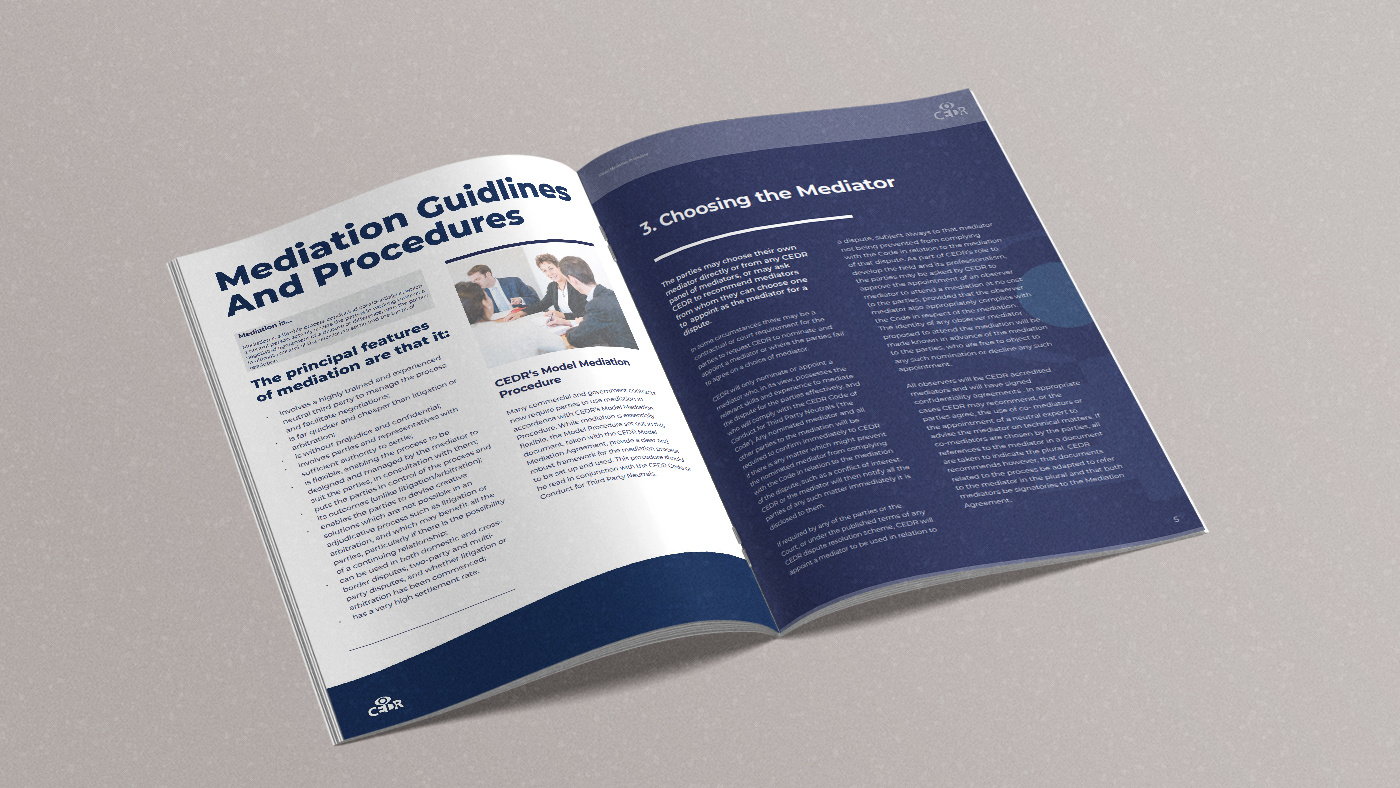
CEDR Impact Report 2023
The report sets out the financial and social impact of CEDR's work during 2022, showing how our initiatives benefit the people and communities we serve.

CEDR Mediation Audits
The CEDR Mediation Audit survey is run in collaboration with the Civil Mediation Council (CMC).
Our regular audits provide comprehensive data on mediation practice, trends, and the profession's evolution, informing policy and practice development across the sector.
2025: Eleventh Mediation Audit
2023: Tenth Mediation Audit
2021: Ninth Mediation Audit
2019: Eighth Mediation Audit
Past Projects: Learning from What We've Built
Our commitment to advancing ADR has produced valuable research and programmes that continue to inform best practice.
/FW-CEDR-4-Professionals-work-in-a-Corporate-Office-in-glass-high-rise.jpg?width=2000&height=1334&name=FW-CEDR-4-Professionals-work-in-a-Corporate-Office-in-glass-high-rise.jpg)
Mediation for Business and Human Rights
Creating accessible, rights-compatible dispute resolution for business-human rights conflicts.
Mediation offers a flexible, responsive option for resolving disputes involving businesses and human rights, helping parties reach interest-based solutions whilst preserving relationships and reducing reliance on adversarial remedies.
Our approach:
Drawing on the UN Guiding Principles on Business & Human Rights (UNGPs), we've worked to design and pilot mediation schemes that are:
- Legitimate and trusted by all parties
- Accessible and inclusive regardless of power imbalances
- Predictable and fair in process
- Transparent and rights-compatible
- Adaptive and continuously improving
Key considerations:
Translating mediation into human rights contexts requires special attention to power imbalances, maintaining appropriate confidentiality whilst ensuring transparency, equitable access regardless of language, cost, or geography, quality assurance and oversight, and alignment with international human rights norms.
What success looks like:
Effective business-human rights mediation schemes are widely known and trusted by affected communities, operate fairly with clear rules and accountability, provide predictable processes and timelines, enable creative rights-aligned solutions, and support continuous learning and improvement.
Collaborate with us
We're seeking partnerships with mediators, civil society, business, and human rights bodies to pilot and refine mediation models making non-judicial redress more robust and accessible.
New Dialogues: Developing Young Leaders in Conflict Resolution
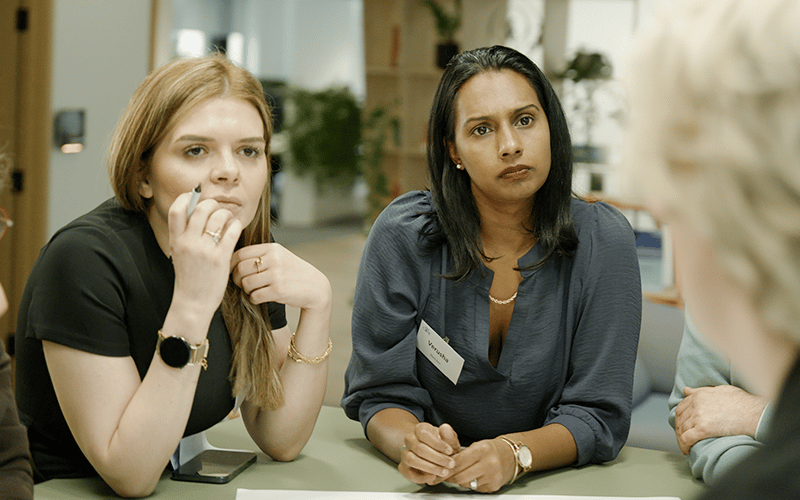
Empowering emerging leaders with the conflict resolution, negotiation, and communication skills to lead positively in their sectors.
The New Dialogues initiative provided intensive capacity building to young professionals across sectors, focusing on 21st-century skills including conflict management, mediation techniques, stakeholder engagement, and leadership in dialogue.
Key achievements:
Over 50 young leaders under 30 participated in a flagship cohort at Allen & Overy, London. The programme prioritised inclusivity, drawing participants from diverse backgrounds and industries to ensure cross-sectoral learning through experiential learning, peer reflection, and applied project work.
Impact:
Graduates reported enhanced confidence in handling complex conversations, improved negotiation capability, and strengthened leadership capacities. The programme created a sustainable alumni network for ongoing dialogue, mentorship, and collaboration.

What participants say:
"New Dialogues has changed the way I approach conflict as I am now more strategic when deciding when to listen and knowing how to use the words I hear well. This knowledge helps me understand the reason behind their conflicting reaction to the situation, and tailor the conversation and resolution in a way that considers the interests of both parties."
Dalitso Tembo, New Dialogues Participant 2018